
Protein Purification


MilliporeSigma™ Calbiochem™ BX-795
BX-795, also referenced under CAS 702675-74-9, modulates the biological activity of multiple kinases. This small molecule/inhibitor is primarily used for Phosphorylation & Dephosphorylation applications.

MilliporeSigma™ Calbiochem™ BMP Inhibitor II, DMH1
The BMP Inhibitor II, DMH1, also referenced under CAS 1206711-16-1, controls the biological activity of BMP. This small molecule/inhibitor is primarily used for Phosphorylation & Dephosphorylation applications.

MilliporeSigma™ Calbiochem™ Adenosine 3',5'-cyclic Monophosphate, 8-Bromo-, Sodium Salt
Cell-permeable cAMP analog that has greater resistance to phosphodiesterases than cAMP.

MilliporeSigma™ Calbiochem™ (+)-Brefeldin A, Eupenicillium brefeldianum
Specifically and reversibly blocks translocation of proteins from the endoplasmic reticulum (ER) to the Golgi apparatus without affecting endocytosis or lysosome function.
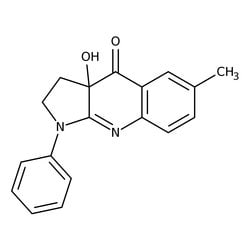
MilliporeSigma™ Calbiochem™ (-)-Blebbistatin
The active enantiomer of (±)-Blebbistatin that accounts for the inhibitory activity towards ATPase and myosin II-dependent cellular processes.

Thermo Scientific™ POROS™ GoPure™ Oligo (dT)25 Screening Plate, 96-well, 20 μL

Thermo Scientific™ POROS™ GoPure™ Oligo (dT)25 96-well screening plates contain POROS Oligo (dT)25 Affinity Resin and provide a versatile platform for sample preparation, handling, and analysis.
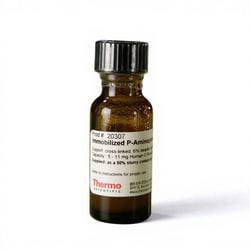
Thermo Scientific™ Pierce™ p-Aminophenyl Phosphoryl Choline Agarose
Bind and purify C-reactive protein (CRP) using these agarose beads of immobilized p-aminophenyl phosphoryl choline (APC).

MilliporeSigma™ Calbiochem™ ACA
A cell-permeable inhibitor of phospholipase A2 that blocks epinephrine-stimulated thromboxane production in platelets.
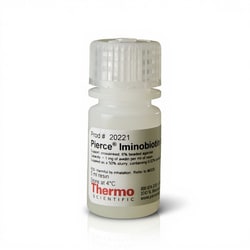
Thermo Scientific™ Pierce™ Iminobiotin Agarose
Agarose beads of immobilized biotin (and iminobiotin) to strongly (or reversibly) bind and remove (or purify) streptavidin or avidin proteins and conjugates from samples.

Thermo Scientific™ POROS™ GoPure™ AAV9 Screening Plate, 96-well, 20 μL
Thermo Scientific™ POROS™ GoPure™ AAV9 96-well screening plates contain POROS CaptureSelect AAV9 Affinity Resin and provide a versatile platform for sample preparation, handling, and analysis.

Thermo Scientific™ POROS™ GoPure™ AAVX Screening Plate, 96-well, 20 μL
Thermo Scientific™ POROS™ GoPure™ AAVX 96-well screening plates contain POROS CaptureSelect AAVX Affinity Resin and provide a versatile platform for sample preparation, handling, and analysis.

Invitrogen™ Streptavidin Agarose, sedimented bead suspension
The streptavidin conjugated to 4% beaded crosslinked agarose can be used to isolate biotinylated proteins.


MilliporeSigma™ Calbiochem™ (±)-Ibuprofen
A nonsteroidal anti-inflammatory drug (NSAID) that acts as a reversible and competitive inhibitor of cyclooxygenase 1 (COX-1) (IC50 = 4.85 μM).
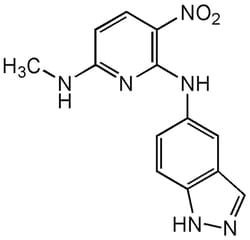
MilliporeSigma™ Calbiochem™ Heat Shock Factor 1 Inhibitor, KRIBB11
The Heat Shock Factor 1 Inhibitor, KRIBB11 controls the biological activity of Heat Shock Factor 1.
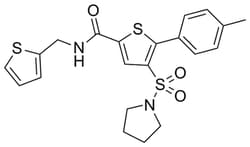
MilliporeSigma™ Calbiochem™ STAT3 Inhibitor XVI
The STAT3 Inhibitor XVI controls the biological activity of STAT3. This small molecule/inhibitor is primarily used for Cancer applications.